Los Angeles Mattress Guide
Choosing Naturepedic Latex: Core Feel, Certifications, and Fit
A latex mattress is more than a material choice. Its feel comes from the layers beneath the cover, while certifications help clarify how materials were sourced and tested. For Los Angeles shoppers, the decision also has a practical side: will the mattress fit the bed frame, the room, and the route from the curb to the bedroom?
A guide to comparing latex construction, interpreting organic claims, and checking delivery details before committing to a new sleep surface.
Start with the feel, not the label
“Latex” describes a family of materials, not a single, predictable mattress experience. A latex mattress may feel buoyant and springy, gently contouring, or distinctly firm, depending on the type of latex, the thickness and firmness of each layer, the cover, and the support system below it. Two mattresses described as natural or organic latex can still feel markedly different.
That distinction matters when comparing Naturepedic latex options with other natural latex organic mattresses. A brand name or materials claim can narrow the search, but it does not tell you whether a particular model will suit your body, sleeping position, or preferred level of cushioning. The useful question is not simply, “Is it latex?” It is, “What is the latex doing in this mattress, and how does the whole construction behave?”
Latex generally responds more quickly to movement than many slow-response foams. Some sleepers appreciate that lift: changing positions can feel easier, and the surface may seem less enveloping. Others prefer the deeper, slower contour of a different comfort material. Neither preference is universal. The best comparison is a careful one, based on construction details and, where possible, a meaningful in-person test.
In a showroom, take a few minutes to settle into your usual sleep position rather than judging the bed after a brief sit. Notice pressure at the shoulders and hips, whether your lower back feels supported, and how easily you can roll over. If you share a bed, test together. A mattress that seems comfortable for one person may transmit enough movement to disturb the other, or may require a different balance of firmness and cushioning.
What “core feel” means in practice
The latex core is the mattress’s structural heart, but it does not act alone. In an all-latex design, one or more latex layers may provide both the support foundation and the pressure-relieving surface. In other designs, latex sits above a different support unit or is combined with other comfort materials. The result depends on the complete layer sequence, not the word printed on a product page.
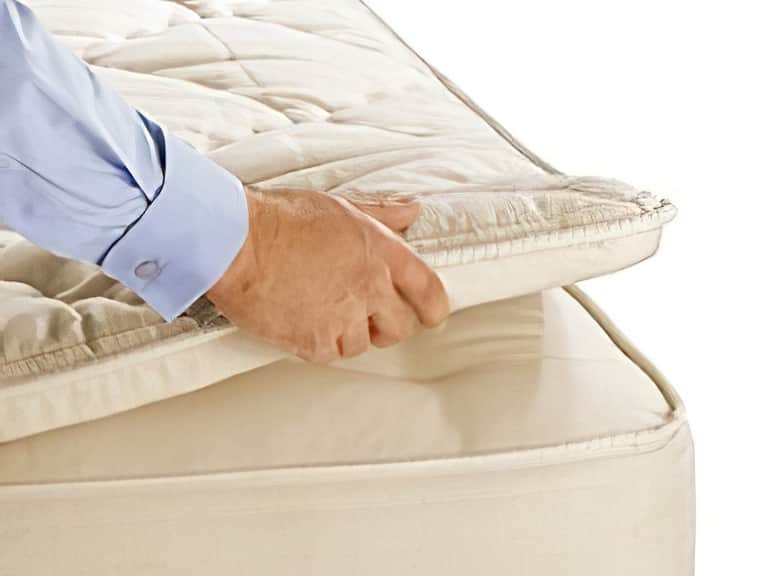
Ask for a layer-by-layer explanation. Find out which layers are latex, how thick they are, and whether their firmness can be selected or changed. A soft upper layer can ease pressure without making the entire bed feel soft; a firmer layer beneath it can help limit excessive sink. Conversely, a mattress with a firm surface layer may feel quite different from one that places a softer layer at the top, even if both use similar materials overall.
Latex is also made through different processes, commonly described as Dunlop and Talalay. These names refer to manufacturing methods, and products made by either method can vary in firmness and feel. It is risky to treat one method as automatically superior. Compare the specific mattress’s comfort description, construction, and trial terms rather than relying on a simple rule that one process will suit every sleeper.
Firmness itself is not a medical prescription. Body weight, body shape, posture, and personal comfort all affect how a surface feels. Side sleepers often look for enough cushioning around the shoulder and hip; back sleepers may prefer a surface that supports the torso without feeling rigid; stomach sleepers frequently want to avoid excessive sinking around the middle. These are starting points for comparison, not guarantees or substitutes for professional advice about persistent pain.
Couples should consider whether the mattress can be configured differently on each side. A split or separately adjustable construction can help partners with different preferences, but it may introduce a center seam or require careful bedding choices. Confirm exactly what can be customized, which sizes allow it, and whether a later change involves exchanging layers, replacing the mattress, or paying additional fees.
Read certifications as specific claims
For shoppers seeking an organic mattress, certifications can make a complicated supply chain easier to investigate. They are most useful when read precisely: what material is certified, which standard applies, and whether the claim covers the whole mattress or only a component? “Organic,” “natural,” and “non-toxic” are not interchangeable terms, and a broad marketing phrase does not explain every material in a finished bed.
GOLS, the Global Organic Latex Standard, is associated with organic latex. GOTS, the Global Organic Textile Standard, applies to qualifying textile products and processing. A mattress may contain certified latex alongside cotton, wool, adhesives, fire barriers, or other components governed by different requirements. Check the manufacturer’s current documentation to understand which materials carry which certification and what the certification does—and does not—cover.
Some manufacturers also refer to testing or certification programs that address emissions, chemical content, or product safety. These can answer different questions from an organic-material standard. A certification is not a general guarantee of comfort, durability, or suitability for a particular sleeper. It is evidence about a defined criterion, assessed under the standard’s rules. Ask for the certificate or a clear explanation of its scope if a claim is important to your decision.
For a Naturepedic latex mattress, as for any brand, verify the details for the exact model and size under consideration. Product lines can include different constructions, and specifications may change. Look for current product documentation rather than assuming that a certification associated with one component applies to every material or every mattress in the range.
Keep a short list of questions when researching online or speaking with a retailer:
- Which layers contain latex, and what is their stated source and manufacturing method?
- What certification applies to each material, and can the manufacturer provide current documentation?
- Are the cover, quilting, flame barrier, and adhesives described separately?
- What does the warranty cover, and what are the conditions for a comfort exchange or return?
- Are trial, delivery, pickup, and disposal terms different for custom or specialty configurations?
These questions help distinguish verifiable product facts from general claims. They also make comparisons fairer: two mattresses should be evaluated on equivalent details, not on one brand’s most prominent label and another’s fine print.
Fit includes the room and the route
In Los Angeles, the mattress can be the easy part. Buildings vary: a home may have a narrow stairwell, a compact elevator, a long shared hallway, a gated entrance, or limited curb access. A mattress that fits the bedroom may still be difficult to carry through the building. Before ordering, measure both the destination and the route it will take to get there.
Begin with the room. Measure the available floor area and account for nightstands, doors, closets, and walking space. Confirm the mattress dimensions—not just the size name—because bed frames and room layouts may leave little tolerance. A California king, for example, differs in proportions from a standard king; the relevant question is whether the exact footprint works in your room and with your frame.
Then trace the delivery path from the building entrance to the bedroom. Measure tight turns, stair landings, doorways, elevator interiors, and any low ceiling or protruding fixture that could obstruct a large mattress. For apartments, confirm whether the building has delivery hours, freight-elevator reservations, loading restrictions, or requirements for proof of insurance. Ask the retailer what happens if the team cannot complete delivery on the scheduled day.
Latex mattresses can be substantial. Their weight and construction may make them less convenient to maneuver than some compressed, boxed alternatives. Do not assume that every latex mattress arrives rolled, or that a boxed mattress will be simple to carry up every staircase. Ask how the chosen model is packed, whether it arrives in separate layers, whether setup is included, and whether the delivery team will place it on the frame.
Existing bed frames deserve a separate check. Confirm that the frame or foundation is compatible with the manufacturer’s support requirements, including any rules about slat spacing, center support, or adjustable bases. A suitable mattress on an unsuitable foundation may not perform as intended and could affect warranty coverage. If the bed frame is older, inspect its condition and measure it before placing an order.
Delivery pricing and services can vary by address, building access, and product. Request the total in writing, including setup, old-mattress removal, and any access-related charges. If disposal is important, verify whether the service is available for your location and whether the old mattress must meet particular conditions. Los Angeles-area shoppers should confirm local requirements directly with the provider rather than relying on assumptions about what a standard delivery includes.
A useful comparison point: adjustable latex layers
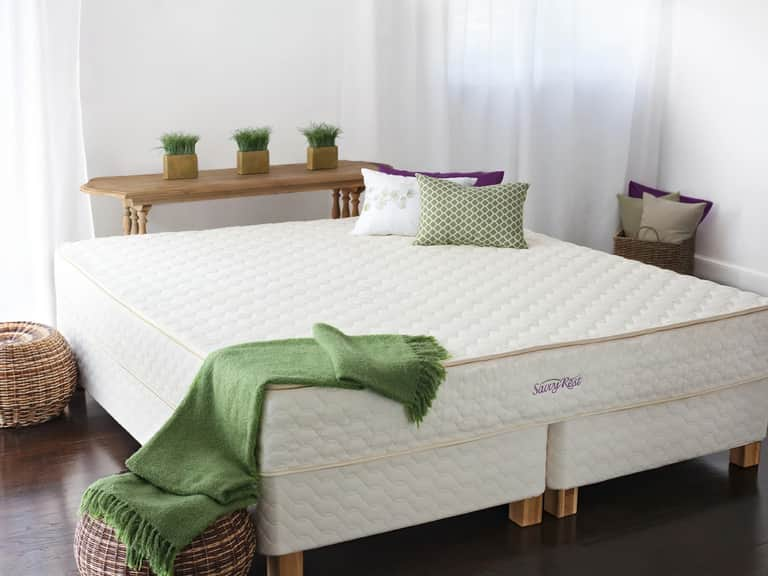
One way to understand how configuration changes mattress feel is to examine a model with individually selectable latex layers. The Savvy Rest Serenity Latex Mattress is a 10-inch mattress made with three layers of Dunlop and/or Talalay latex, with soft, medium, and firm options. Its organic cotton casing is quilted with organic wool, and the product information describes side-specific customization for Queen and King sizes.
This is not a Naturepedic model, and the distinction matters. It is relevant here as a construction example: a layered latex design makes clear that “latex feel” can be adjusted through the placement and firmness of the layers. The product information also describes a 90-day layer-exchange policy and a 20-year limited warranty; shoppers should confirm current terms, availability, delivery costs, and any conditions directly before making a purchase.
When using a configurable model as a comparison, focus on the questions it raises. Does the mattress allow the comfort layer to be changed? Can partners select separate configurations? Is a layer exchange included, and what does it cost to ship or replace a layer? Is the cover designed to open for adjustment, and does the manufacturer specify how the mattress should be assembled? These details can be as consequential as the first impression in a store.
Trial periods, warranties, and the long view
A showroom test offers a useful snapshot, but a mattress’s real character emerges over repeated nights. Review the sleep-trial policy before ordering: how long the trial lasts, whether a break-in period is required, what counts as a return, and whether transportation or restocking fees apply. Custom configurations may have different terms from standard models. A “trial” is only as helpful as its written conditions.
Warranty language also requires close reading. A limited warranty is not necessarily a promise to replace a mattress whenever it becomes uncomfortable. It typically defines covered defects, exclusions, required support conditions, and the remedy available. Keep the receipt, product specifications, and care instructions. Use the mattress with an approved foundation and follow the manufacturer’s guidance to reduce avoidable disputes.
Latex’s reputation for resilience can make it attractive to shoppers thinking beyond the first few years, but durability depends on construction, materials, use, and care. No material label can guarantee a fixed lifespan in every home. Ask what the manufacturer says about rotating or maintaining the mattress, whether the cover can be removed, and which components are meant to be replaced or adjusted.
Care instructions can also shape everyday practicality. Some covers are spot-clean only; others may have removable components that are not machine washable. Protecting the mattress with a suitable protector can help limit spills and soil, but check that it does not compromise the feel or violate care requirements. Avoid applying cleaning products or exposing materials to direct heat unless the manufacturer explicitly permits it.
A deliberate path from shortlist to decision
Comparing natural latex organic mattresses can become a maze of material names and certification marks. A simple, repeatable process keeps the decision grounded. First, define the feel you want: buoyant or deeply cushioning, more yielding at the shoulder or more resistant under the torso. Then identify the mattress’s layer structure and ask how its core contributes to that sensation.
Next, verify the claims. Match each certification to the material it covers, and request current evidence for the specific model. Compare the entire construction, not isolated phrases such as “organic latex” or “natural comfort.” If one product gives detailed layer specifications while another offers only a broad description, treat that difference in transparency as part of the comparison.
Finally, test the logistics before you buy. Measure your frame, room, and delivery route. Confirm access, setup, removal, and charges in writing. For Los Angeles residents, where apartment rules and building layouts can complicate a seemingly routine delivery, these checks are part of product fit—not an afterthought.
The right mattress is not the one with the most impressive vocabulary. It is the one whose materials are documented, whose construction suits your comfort preferences, and whose delivery and support arrangements make sense for your home. Take the time to compare those elements together. A careful choice turns a mattress purchase from a leap of faith into a decision you can explain.