Los Angeles Mattress Guide
Planning Natural Latex Delivery for Tight Apartment Spaces
A natural latex mattress may be chosen for its supportive feel and durable construction. Getting it into an apartment, however, is a separate practical challenge. A careful route check—along with clear delivery questions—can help prevent an expensive mattress from meeting an immovable stairwell.
Published November 2, 2026
In Los Angeles, a mattress delivery can involve more than a truck pulling up to a curb. The route from the street to the bedroom may pass through a controlled-entry lobby, a narrow corridor, a tight elevator, a shared stairwell, or a turn that appears generous until a bulky package reaches it. Older apartment buildings and compact units make those details especially important. A natural latex mattress can be heavy and substantial, and its packaging may not behave like a flexible bag of bedding.
The useful rule is simple: measure the whole journey, not just the bed frame. The mattress has to pass through every opening and negotiate every turn on its way indoors. Checking dimensions before ordering gives you a chance to compare the product’s actual delivery format with the building’s access—not merely with the bedroom where it will eventually rest.
This guide walks through the measurements, delivery questions, and building arrangements worth considering before ordering a natural latex mattress in Los Angeles. It is intended to help renters and homeowners make a more informed plan; it does not replace the retailer’s product specifications or the building’s own rules.
Why latex delivery deserves a little planning
Latex mattresses are made from a resilient material that can feel supportive and responsive. Their construction varies. Some products use a single thick latex core; others combine several layers with cotton, wool, or other materials. A mattress might arrive compressed and boxed, or it might be delivered in a more conventional, full-size form. There is no universal delivery format, so assumptions based on another mattress—or another order—can mislead.
Weight matters as much as width and height. Latex is dense, and a mattress can be difficult to maneuver even when it technically fits through a doorway. A bulky package may also have limited grip points or a shape that makes it awkward to pivot. The amount of assistance needed depends on the mattress, packaging, route, and delivery service. Ask the retailer for the package dimensions and weight, not only the finished mattress dimensions.
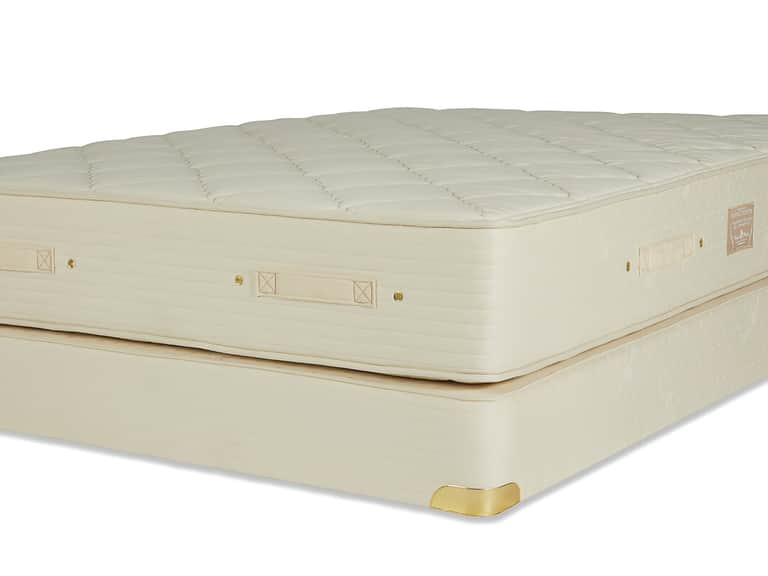
One option listed for shoppers is the Naturally Organic Hudson Latex Mattress, an eight-inch latex mattress with layers wrapped in organic cotton and quilted with wool. If considering this or any other model, confirm current specifications and delivery arrangements directly with the retailer. Product construction alone does not establish how an order will be packaged, carried, or installed.
The word “organic” describes material attributes and, where applicable, certification claims. It does not mean a mattress is lightweight, easy to bend, or simple to carry up stairs. A responsible purchase plan considers both the materials you want and the physical route the item must travel.
Measure the route from curb to room
Start outside the building and trace the likely path to the bedroom. If a delivery crew will use a service entrance, loading area, or designated elevator, measure that route rather than the one residents usually take. Building staff may direct deliveries through a different entrance, and a route that looks shorter on a map may have a narrower door or a stricter access policy.
Record measurements in a consistent unit and keep them together in a note or checklist. Measure the clear opening—not just the outside dimensions of a doorframe—and account for anything that reduces usable space. Door stops, handles, railings, wall-mounted fixtures, and heavy closer mechanisms can all affect how an object moves through a passage.
- Building entrance: Measure the open doorway and any vestibule or second set of doors. Note whether both doors can remain open at once and whether a threshold creates a height change.
- Lobby and corridors: Measure the narrowest clear width along the route. Check for turns, alcoves, radiators, mailboxes, security gates, or other obstructions.
- Staircases: Measure stair width, ceiling clearance, handrail projection, and landing depth. A mattress must often be turned as well as carried, so the landing dimensions matter.
- Elevators: Record the interior height, width, and depth, along with the doorway opening. If there is a service elevator, confirm its dimensions and availability.
- Apartment doorway: Measure the clear opening and the space immediately inside it. A mattress might clear the door but still be difficult to rotate into a narrow hall.
- Bedroom access: Check bedroom doors, internal hallways, and any tight corners between the entry and the bed location.
Do not assume that a rectangle’s longest side can simply be tilted upward to pass through a smaller opening. The feasibility of a turn depends on the object’s dimensions, the shape of the surrounding space, and the room available to maneuver. A box may be rigid and bulky; an unboxed mattress may flex to some degree, but its weight, construction, and handling instructions still matter. If a route appears close, provide measurements to the retailer and ask for a specific assessment rather than relying on a guess.
Compare building access with package dimensions
Retail listings usually emphasize mattress size, thickness, and comfort features. Those are useful for choosing a sleep surface, but delivery planning calls for another set of facts. Request the shipment’s outside dimensions and approximate weight. Ask whether those figures describe the boxed item, a wrapped mattress, or a separate component. If the order includes a foundation or other large pieces, each item needs its own route check.
For a compressed mattress, the package may be smaller than the expanded product, but compression should not be treated as a guarantee that the package will fit. Its length, width, and firmness as a parcel still determine how it can turn through a stairwell or hallway. For a mattress delivered flat, its full dimensions may dictate the maneuver. Packaging and handling methods vary by brand and service, so confirm the details for the exact model and size.
When contacting a retailer, share the tightest points on the route rather than simply saying that the apartment is small. For example, report the elevator opening, the elevator interior, the narrowest corridor, and the dimensions of the tightest stair landing. Ask whether the delivery team can evaluate those facts before the order is finalized. Keep any response in writing where possible, especially if the purchase depends on access or an installation service.
Ask precise questions about delivery and setup
“Delivery included” can describe several different levels of service. It may mean the package is brought to a building entrance, carried to an apartment, placed in a room, or unpacked and set up. It may exclude stairs, restricted elevators, removal of packaging, or the moving of an old mattress. The details are retailer- and service-specific, so clarify them before paying.
- What is the exact delivery method for this mattress and size: boxed, compressed, wrapped, or delivered flat?
- What are the approximate package dimensions and weight?
- Does the service include carrying the mattress inside the apartment, or only to the building entrance?
- Is room-of-choice placement available, and does it include setup on the existing bed frame?
- Are stairs, long carries, narrow access, or additional floors subject to limits or extra fees?
- Does the delivery crew need a service elevator, parking access, or advance building approval?
- What happens if the team arrives and cannot safely bring the mattress inside?
- Are redelivery, return, storage, or cancellation fees possible in that situation?
- Can the old mattress be removed, and are there conditions, charges, or preparation requirements?
Ask what “white-glove delivery” means for the specific order rather than treating the phrase as a standard promise. One provider might include setup; another may define the service differently. Find out whether the crew will remove packaging, whether the mattress must be placed on a ready foundation, and whether the service includes adjustments to the route or handling of a difficult stairwell.
Equally important is the failed-delivery policy. If a mattress cannot pass through the route, the outcome could involve a return, a second attempt, additional labor, or a charge. Policies differ, and a customer should not assume that an access problem is automatically covered by a standard return window. Read the relevant terms and ask for clarification before the delivery date is set.
Coordinate with a Los Angeles apartment building
Los Angeles buildings can have their own procedures for deliveries. A property manager may require advance notice, a loading reservation, proof of insurance from a delivery company, or use of a particular entrance. Some buildings limit deliveries to certain hours, restrict elevator use, or require protective coverings in common areas. These policies are not uniform; the building’s management or lease documents are the reliable source for your address.
For renters, check the lease, resident handbook, or management portal and contact the building office early. Explain the planned delivery date, the item’s approximate size, and whether a crew will use stairs or an elevator. Ask whether a reservation is needed and whether the building requires a certificate of insurance or other documentation from the delivery provider. Confirm whether a loading area can be used and how long a vehicle may remain there.
Traffic and parking can also shape the plan. A delivery appointment may be scheduled within a window rather than at an exact time, and curb access may be limited. Do not block a driveway, fire lane, or building entrance while attempting to unload. Ask the delivery company how it handles parking and communicate any loading instructions in advance. A legal, accessible stopping point is safer than an improvised curbside plan.
On the day itself, have a responsible adult available if the service requires someone to admit the crew or approve placement. Keep corridors clear, secure pets, and move fragile objects away from the route. If the elevator has been reserved, confirm that reservation before the truck arrives. These small preparations reduce delays without asking building staff or delivery workers to make last-minute decisions.
Make a simple access checklist
A short written checklist can keep measurements and promises from getting lost across calls and emails. Include the mattress model and size, package dimensions, delivery type, route measurements, building rules, and the name of the person who confirmed each detail. Keep a copy of the order terms and delivery policy with the same notes.
Before placing the order
- Confirm the mattress’s finished dimensions, package format, and estimated weight.
- Measure the entrance, hallways, stairs and landings, elevator, apartment door, and bedroom route.
- Ask the retailer how the mattress will be carried, placed, and set up.
- Review charges and the policy for access-related delivery problems.
- Check building rules, reservations, parking instructions, and delivery hours.
If measurements are close, pause before ordering. A few extra minutes spent getting a retailer’s assessment can be less costly than discovering that a delivery crew cannot complete the job. In some cases, changing the mattress size, choosing a different packaging format, or arranging an approved delivery method may resolve the issue. In others, the building route may simply be incompatible with a particular product. It is better to learn that before the purchase is in transit.
Choosing natural latex for apartment living
Access is one factor in choosing a mattress; sleep preferences and support needs remain central. Consider how the surface feels, what firmness is comfortable, whether the construction suits your sleep position, and what kind of foundation the manufacturer permits. Check thickness and total bed height as well. In a compact apartment, a mattress that fits the room can still make a low ceiling, small nightstand, or tight bed-frame clearance feel more constrained.
Natural latex products may include different combinations of latex, wool, and cotton. Materials and certifications should be checked in the product documentation, and claims should be read carefully. “Natural” and “organic” are not interchangeable descriptions; certifications apply to particular materials or processes, not automatically to every component in a product. Ask the retailer for the certification details that matter to you.
Think about future moves, too. Renters may relocate, and a mattress that is difficult to deliver may also be difficult to move later. Before buying, consider whether it can be disassembled or carried through the same route in reverse, how it should be protected during a move, and whether the manufacturer provides handling guidance. A sturdy bed frame or foundation may also arrive in separate pieces, which can make access easier—but its delivery and assembly still need to be planned.
Avoid common planning mistakes
The most common error is measuring only the bedroom. A mattress can be perfectly suited to the bed and still fail at the lobby door or the turn at the top of a staircase. Another is measuring the elevator’s interior but forgetting the doorway opening. A large cabin does not help if the package cannot pass through its doors or be rotated inside.
It is also risky to assume a mattress can be bent or folded to get around a corner. The correct handling depends on the construction and manufacturer’s instructions. Forcing a product into an unsuitable shape may damage it or create a safety risk. Ask the retailer what movement is permitted and do not pressure a delivery crew to attempt a maneuver they consider unsafe.
Finally, do not rely on vague assurances. “It should fit” is not the same as comparing package dimensions with actual access measurements. A clear exchange includes the precise route, product size, package format, service scope, and written policy for any exception. That level of detail is particularly useful when ordering a large natural latex mattress for an apartment building with shared access.
A calmer delivery begins before checkout
Buying a mattress is often framed as a decision about comfort, materials, and price. In an apartment, logistics belong in the decision from the start. Measure the path, ask about the package, confirm what the delivery service includes, and coordinate with building management. If a point remains uncertain, resolve it before selecting a delivery date.
For Los Angeles residents comparing a latex mattress with other options, the practical test is not whether the mattress can fit in the room. It is whether the chosen product can reach that room safely, under the retailer’s delivery terms and the building’s rules. With a careful plan, the move from order confirmation to a prepared bed can be less about improvisation and more about knowing what to expect.